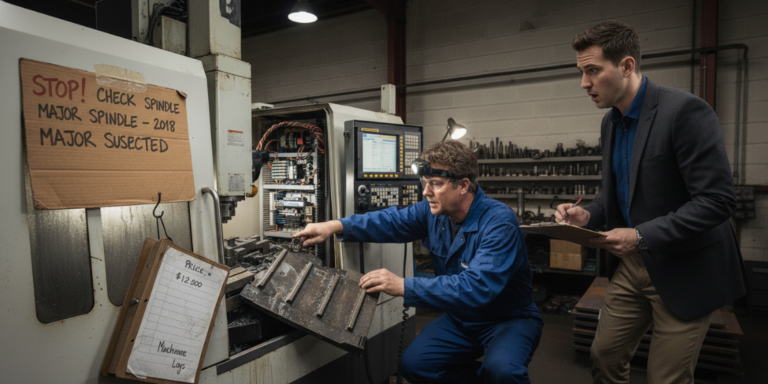
When buyers inspect a used CNC machine, they often focus on the obvious things — the controller, the spindle sound, or how clean the machine looks.
But one of the most common mistakes when buying used CNC machines is far less visible:
👉 Not checking ball screws and backlash.
This single oversight can turn a “working machine” into a constant source of inaccuracy, rejected parts, and unexpected repair costs.
In this guide, we’ll explain why ball screws and backlash matter so much, how buyers overlook them, and how to avoid this expensive mistake.
Why Ball Screws Are the Heart of CNC Accuracy
Ball screws control the movement of each axis.
They directly affect:
- Positioning accuracy
- Repeatability
- Surface finish
- Tool life
A used CNC machine can power on perfectly and still fail at its core job if ball screws are worn.
What Is Backlash (And Why It Matters)?
Backlash is the lost motion between command and actual movement.
In a CNC machine, excessive backlash causes:
- Dimensional inaccuracies
- Inconsistent part sizes
- Poor surface finish
- Difficulty holding tolerances
Backlash doesn’t always show up in short demos — but it shows up in production.
Why Buyers Skip Ball Screw and Backlash Checks
This mistake happens because:
- Backlash is not visually obvious
- Measuring requires simple tools and time
- Sellers rarely highlight it
- Buyers assume it can be “adjusted later”
Unfortunately, serious ball screw wear is not a minor adjustment — it’s a major expense.
The Real Cost of Ignoring Ball Screw Wear
Replacing ball screws in a used CNC machine can involve:
- High part costs
- Long downtime
- Precision alignment work
In many cases, the repair cost alone can wipe out the savings of buying used.
That’s why ignoring ball screws is one of the most dangerous common mistakes when buying used CNC machines.
How Backlash Develops Over Time
Backlash increases due to:
- Continuous heavy cutting
- Poor lubrication
- Contaminated guideways
- Long production hours
A used CNC machine that ran aggressive roughing cycles is more likely to show backlash — even if it looks clean.
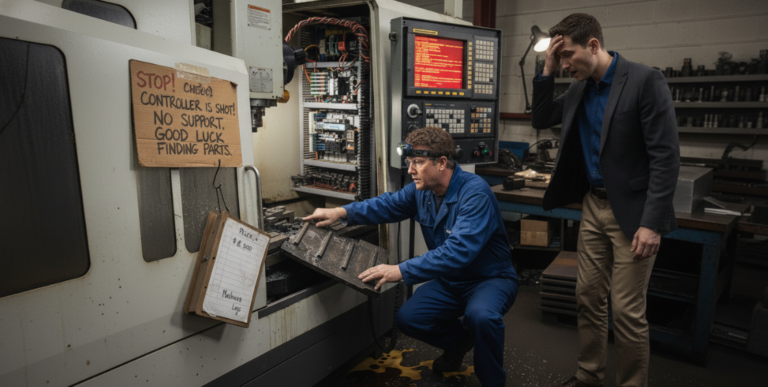
Real-World Example: “It Looked Perfect”
A buyer purchases a used CNC machine after a short demo.
After installation:
- Parts vary in size
- Finishing operations fail
- Rework increases
Inspection reveals excessive backlash on two axes.
The machine runs — but it cannot produce consistent parts.
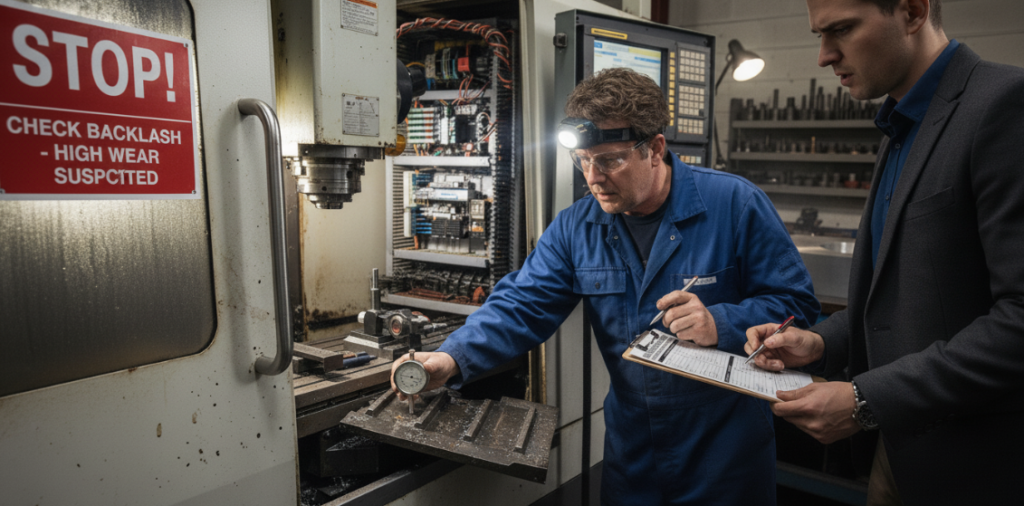
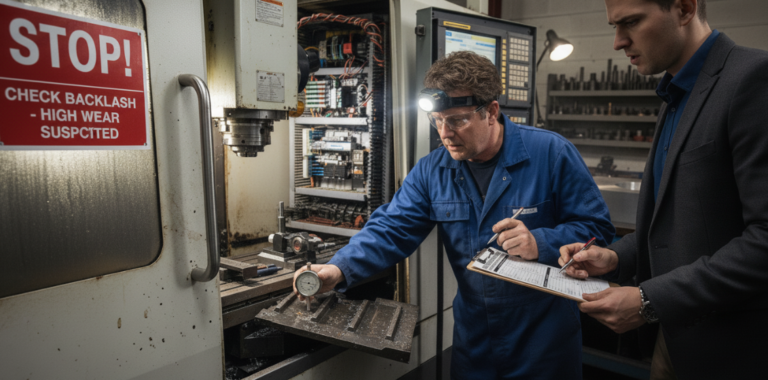
How to Check Ball Screws and Backlash Properly
Checking backlash doesn’t require advanced equipment.
Basic steps include:
- Use a dial indicator on each axis
- Reverse direction slowly
- Measure lost motion
- Compare values across axes
Even simple tests reveal whether a used CNC machine is worth serious consideration.
Warning Signs of Ball Screw Problems
Watch for:
- Knocking or clicking during axis movement
- Jerky motion at slow feed
- Inconsistent positioning
- Audible noise during rapid movement
These signs often point to deeper wear.
Why Sellers Rarely Talk About Backlash
Backlash doesn’t show well in videos or photos.
Some sellers may:
- Avoid discussing measurements
- Rush demonstrations
- Emphasize cosmetic condition
That’s why buyers must ask — and measure.
How Smart Buyers Avoid This Mistake
Experienced buyers:
- Always measure backlash
- Compare results with machine specs
- Factor wear into pricing decisions
- Walk away when backlash exceeds acceptable limits
They know a used CNC machine must move accurately before it can cut accurately.
Backlash vs Price: A Dangerous Trade-Off
Some buyers accept backlash to get a lower price.
This is risky because:
- Backlash reduces production capability
- Repair costs are unpredictable
- Machine resale value drops
A slightly higher-priced used CNC machine with healthy ball screws is often the better investment.
Quick Reminder for Buyers
When evaluating a used CNC machine:
- ❌ Don’t assume ball screws are fine
- ❌ Don’t skip backlash measurement
- ❌ Don’t rely on appearance
- ✅ Always test motion accuracy
Final Thoughts: Accuracy Starts With Motion
Not checking ball screws and backlash is one of the most common mistakes when buying used CNC machines, and it’s one of the easiest to prevent.
A used CNC machine can only be as accurate as its movement system.
If you check ball screws carefully, you protect:
- Part quality
- Production efficiency
- Long-term reliability
In the used CNC market, precision is not promised — it’s proven.
Continue Learning
Explore more expert insights on Common Mistakes When Buying Used CNC Machines, inspection guides, and buyer strategies at
UsedCNCMachineForSale.com
When buyers inspect a used CNC machine, they often focus on the obvious things — the controller, the spindle sound, or how clean the machine looks.
But one of the most common mistakes when buying used CNC machines is far less visible:
👉 Not checking ball screws and backlash.
This single oversight can turn a “working machine” into a constant source of inaccuracy, rejected parts, and unexpected repair costs.
In this guide, we’ll explain why ball screws and backlash matter so much, how buyers overlook them, and how to avoid this expensive mistake.
Why Ball Screws Are the Heart of CNC Accuracy
Ball screws control the movement of each axis.
They directly affect:
- Positioning accuracy
- Repeatability
- Surface finish
- Tool life
A used CNC machine can power on perfectly and still fail at its core job if ball screws are worn.
What Is Backlash (And Why It Matters)?
Backlash is the lost motion between command and actual movement.
In a CNC machine, excessive backlash causes:
- Dimensional inaccuracies
- Inconsistent part sizes
- Poor surface finish
- Difficulty holding tolerances
Backlash doesn’t always show up in short demos — but it shows up in production.
Why Buyers Skip Ball Screw and Backlash Checks
This mistake happens because:
- Backlash is not visually obvious
- Measuring requires simple tools and time
- Sellers rarely highlight it
- Buyers assume it can be “adjusted later”
Unfortunately, serious ball screw wear is not a minor adjustment — it’s a major expense.
The Real Cost of Ignoring Ball Screw Wear
Replacing ball screws in a used CNC machine can involve:
- High part costs
- Long downtime
- Precision alignment work
In many cases, the repair cost alone can wipe out the savings of buying used.
That’s why ignoring ball screws is one of the most dangerous common mistakes when buying used CNC machines.
How Backlash Develops Over Time
Backlash increases due to:
- Continuous heavy cutting
- Poor lubrication
- Contaminated guideways
- Long production hours
A used CNC machine that ran aggressive roughing cycles is more likely to show backlash — even if it looks clean.
Real-World Example: “It Looked Perfect”
A buyer purchases a used CNC machine after a short demo.
After installation:
- Parts vary in size
- Finishing operations fail
- Rework increases
Inspection reveals excessive backlash on two axes.
The machine runs — but it cannot produce consistent parts.
How to Check Ball Screws and Backlash Properly
Checking backlash doesn’t require advanced equipment.
Basic steps include:
- Use a dial indicator on each axis
- Reverse direction slowly
- Measure lost motion
- Compare values across axes
Even simple tests reveal whether a used CNC machine is worth serious consideration.
Warning Signs of Ball Screw Problems
Watch for:
- Knocking or clicking during axis movement
- Jerky motion at slow feed
- Inconsistent positioning
- Audible noise during rapid movement
These signs often point to deeper wear.
Why Sellers Rarely Talk About Backlash
Backlash doesn’t show well in videos or photos.
Some sellers may:
- Avoid discussing measurements
- Rush demonstrations
- Emphasize cosmetic condition
That’s why buyers must ask — and measure.
How Smart Buyers Avoid This Mistake
Experienced buyers:
- Always measure backlash
- Compare results with machine specs
- Factor wear into pricing decisions
- Walk away when backlash exceeds acceptable limits
They know a used CNC machine must move accurately before it can cut accurately.
Backlash vs Price: A Dangerous Trade-Off
Some buyers accept backlash to get a lower price.
This is risky because:
- Backlash reduces production capability
- Repair costs are unpredictable
- Machine resale value drops
A slightly higher-priced used CNC machine with healthy ball screws is often the better investment.
Quick Reminder for Buyers
When evaluating a used CNC machine:
- ❌ Don’t assume ball screws are fine
- ❌ Don’t skip backlash measurement
- ❌ Don’t rely on appearance
- ✅ Always test motion accuracy
Final Thoughts: Accuracy Starts With Motion
Not checking ball screws and backlash is one of the most common mistakes when buying used CNC machines, and it’s one of the easiest to prevent.
A used CNC machine can only be as accurate as its movement system.
If you check ball screws carefully, you protect:
- Part quality
- Production efficiency
- Long-term reliability
In the used CNC market, precision is not promised — it’s proven.
Continue Learning
Explore more expert insights on Common Mistakes When Buying Used CNC Machines, inspection guides, and buyer strategies at
UsedCNCMachineForSale.com