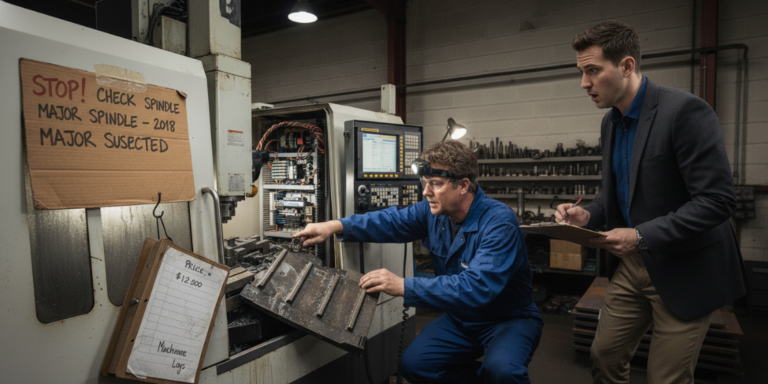
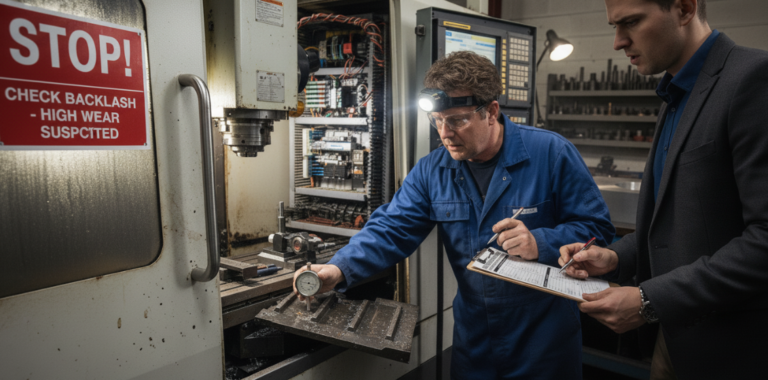
When people buy a used CNC machine, one mistake appears again and again — across countries, industries, and experience levels.
👉 They choose price over condition.
It feels logical at first.
Lower price = better deal, right?
In reality, this single decision is responsible for more failed CNC purchases, production losses, and financial regret than almost any other factor.
This article explains why choosing price over condition is one of the most common mistakes when buying used CNC machines, how it quietly destroys ROI, and how smart buyers avoid it.
Why This Mistake Is So Common
When buyers search for a used CNC machine, they are often:
- Trying to save capital
- Under pressure to start production quickly
- Comparing multiple machines online
- Influenced by “too good to be true” pricing
Price becomes the easiest comparison point — but also the most misleading.
A used CNC machine is not a commodity.
It’s a mechanical system with wear, history, and hidden costs.
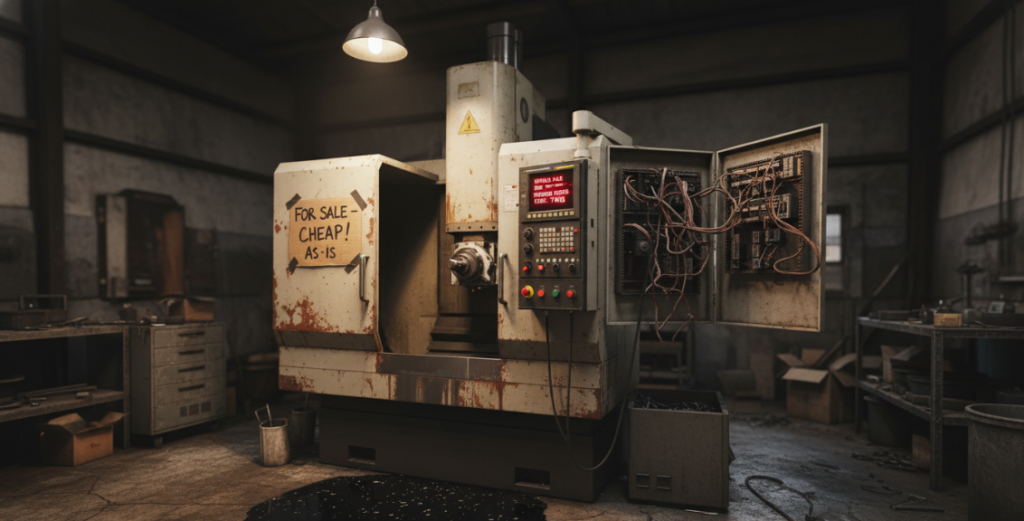
The Illusion of a “Cheap” Used CNC Machine
A low-priced used CNC machine usually looks attractive because:
- The initial investment feels safe
- It fits the budget comfortably
- Sellers highlight cosmetic cleanliness
What buyers don’t see immediately:
- Worn ball screws
- Spindle fatigue
- Electrical instability
- Accuracy loss
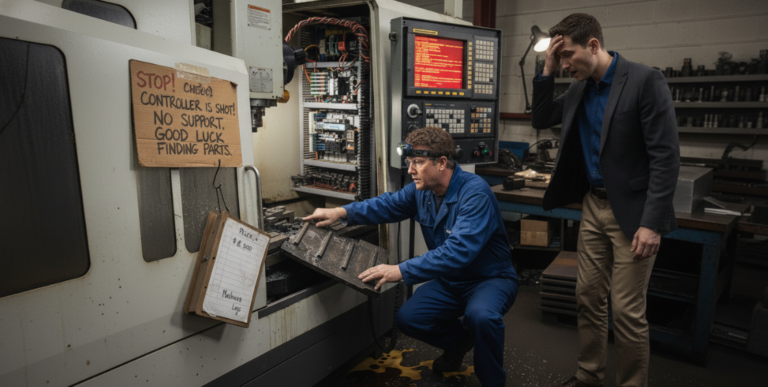
These issues don’t appear on invoices — they appear after installation, when production begins.
Why Condition Matters More Than Price
Condition determines:
- Accuracy and repeatability
- Machine reliability
- Maintenance frequency
- Long-term operating cost
Two used CNC machines of the same model and year can differ massively in value simply because one was maintained properly and the other was run hard and neglected.
In the used CNC machine market, condition is value.
Real-World Scenario: Cheap vs Well-Maintained
Let’s compare two machines:
Machine A
- Lower price
- Visible wear on guideways
- No maintenance records
- Spindle noise at high RPM
Machine B
- Slightly higher price
- Smooth axis movement
- Documented maintenance
- Clean electrical cabinet
Machine A looks cheaper.
Machine B actually costs less over time.
This is why experienced buyers rarely chase the lowest-priced used CNC machine.
Hidden Costs of Choosing Price Over Condition
This mistake becomes expensive because of hidden costs, such as:
- Emergency repairs after installation
- Lost production time
- Poor surface finish and rejected parts
- Frequent machine stoppages
- Early component replacement
By the time these costs appear, the “cheap” used CNC machine is no longer cheap.
Why Sellers Often Push Price-Focused Buyers
Price-focused buyers are easier to close.
Some sellers know that:
- Buyers chasing low price ask fewer questions
- Inspections are rushed
- Test cuts are skipped
This creates an environment where condition takes a back seat, and problems surface only after the deal is done.
How Smart Buyers Evaluate a Used CNC Machine Instead
Experienced buyers reverse the process.
They ask:
- How smooth is axis movement?
- What is the backlash on each axis?
- How healthy is the spindle?
- Are the electrical systems clean and original?
- Does the machine pass accuracy tests?
Only after answering these questions do they discuss price.
The Role of Inspection in Avoiding This Mistake
A proper inspection protects buyers from price traps.
A thorough inspection includes:
- Mechanical checks (guideways, ball screws)
- Spindle testing across RPM ranges
- Controller and alarm history review
- Accuracy tests and test cuts
A used CNC machine that passes inspection earns its price, even if it’s higher.
Why Higher-Priced Used CNC Machines Often Deliver Better ROI
A well-maintained used CNC machine:
- Starts production faster
- Requires fewer unexpected repairs
- Maintains accuracy longer
- Has better resale value
ROI is not about buying cheap — it’s about earning reliably.
Psychological Traps Buyers Fall Into
This mistake is often emotional, not technical.
Common thoughts include:
- “I can fix it later”
- “It looks clean enough”
- “I’ll upgrade parts gradually”
In reality, major CNC repairs are rarely simple or cheap.
How to Avoid This Common Mistake When Buying Used CNC Machines
Use these rules:
- Never finalize a purchase without inspection
- Never compare machines on price alone
- Always calculate total ownership cost
- Be willing to walk away from a bad deal
- Treat condition as your primary filter
A disciplined approach saves far more money than negotiation alone.
Quick Reminder for Buyers
When evaluating a used CNC machine:
- ❌ Cheap price does not equal good value
- ❌ Cosmetic condition does not equal mechanical health
- ✅ Proven performance beats low cost
- ✅ Condition determines longevity
Final Thoughts: Buy Value, Not Just Price
Choosing price over condition is one of the most common mistakes when buying used CNC machines, and it’s also one of the easiest to avoid.
The best used CNC machine is not the cheapest one.
It’s the one that:
- Runs accurately
- Produces consistent parts
- Minimizes downtime
- Delivers predictable ROI
When you shift your mindset from price to condition, you stop buying machines — and start making investments.
Keep Learning
Explore more expert insights on Common Mistakes When Buying Used CNC Machines, buying guides, and inspection strategies at
UsedCNCMachineForSale.com
When people buy a used CNC machine, one mistake appears again and again — across countries, industries, and experience levels.
👉 They choose price over condition.
It feels logical at first.
Lower price = better deal, right?
In reality, this single decision is responsible for more failed CNC purchases, production losses, and financial regret than almost any other factor.
This article explains why choosing price over condition is one of the most common mistakes when buying used CNC machines, how it quietly destroys ROI, and how smart buyers avoid it.
Why This Mistake Is So Common
When buyers search for a used CNC machine, they are often:
- Trying to save capital
- Under pressure to start production quickly
- Comparing multiple machines online
- Influenced by “too good to be true” pricing
Price becomes the easiest comparison point — but also the most misleading.
A used CNC machine is not a commodity.
It’s a mechanical system with wear, history, and hidden costs.
The Illusion of a “Cheap” Used CNC Machine
A low-priced used CNC machine usually looks attractive because:
- The initial investment feels safe
- It fits the budget comfortably
- Sellers highlight cosmetic cleanliness
What buyers don’t see immediately:
- Worn ball screws
- Spindle fatigue
- Electrical instability
- Accuracy loss
These issues don’t appear on invoices — they appear after installation, when production begins.
Why Condition Matters More Than Price
Condition determines:
- Accuracy and repeatability
- Machine reliability
- Maintenance frequency
- Long-term operating cost
Two used CNC machines of the same model and year can differ massively in value simply because one was maintained properly and the other was run hard and neglected.
In the used CNC machine market, condition is value.
Real-World Scenario: Cheap vs Well-Maintained
Let’s compare two machines:
Machine A
- Lower price
- Visible wear on guideways
- No maintenance records
- Spindle noise at high RPM
Machine B
- Slightly higher price
- Smooth axis movement
- Documented maintenance
- Clean electrical cabinet
Machine A looks cheaper.
Machine B actually costs less over time.
This is why experienced buyers rarely chase the lowest-priced used CNC machine.
Hidden Costs of Choosing Price Over Condition
This mistake becomes expensive because of hidden costs, such as:
- Emergency repairs after installation
- Lost production time
- Poor surface finish and rejected parts
- Frequent machine stoppages
- Early component replacement
By the time these costs appear, the “cheap” used CNC machine is no longer cheap.
Why Sellers Often Push Price-Focused Buyers
Price-focused buyers are easier to close.
Some sellers know that:
- Buyers chasing low price ask fewer questions
- Inspections are rushed
- Test cuts are skipped
This creates an environment where condition takes a back seat, and problems surface only after the deal is done.
How Smart Buyers Evaluate a Used CNC Machine Instead
Experienced buyers reverse the process.
They ask:
- How smooth is axis movement?
- What is the backlash on each axis?
- How healthy is the spindle?
- Are the electrical systems clean and original?
- Does the machine pass accuracy tests?
Only after answering these questions do they discuss price.
The Role of Inspection in Avoiding This Mistake
A proper inspection protects buyers from price traps.
A thorough inspection includes:
- Mechanical checks (guideways, ball screws)
- Spindle testing across RPM ranges
- Controller and alarm history review
- Accuracy tests and test cuts
A used CNC machine that passes inspection earns its price, even if it’s higher.
Why Higher-Priced Used CNC Machines Often Deliver Better ROI
A well-maintained used CNC machine:
- Starts production faster
- Requires fewer unexpected repairs
- Maintains accuracy longer
- Has better resale value
ROI is not about buying cheap — it’s about earning reliably.
Psychological Traps Buyers Fall Into
This mistake is often emotional, not technical.
Common thoughts include:
- “I can fix it later”
- “It looks clean enough”
- “I’ll upgrade parts gradually”
In reality, major CNC repairs are rarely simple or cheap.
How to Avoid This Common Mistake When Buying Used CNC Machines
Use these rules:
- Never finalize a purchase without inspection
- Never compare machines on price alone
- Always calculate total ownership cost
- Be willing to walk away from a bad deal
- Treat condition as your primary filter
A disciplined approach saves far more money than negotiation alone.
Quick Reminder for Buyers
When evaluating a used CNC machine:
- ❌ Cheap price does not equal good value
- ❌ Cosmetic condition does not equal mechanical health
- ✅ Proven performance beats low cost
- ✅ Condition determines longevity
Final Thoughts: Buy Value, Not Just Price
Choosing price over condition is one of the most common mistakes when buying used CNC machines, and it’s also one of the easiest to avoid.
The best used CNC machine is not the cheapest one.
It’s the one that:
- Runs accurately
- Produces consistent parts
- Minimizes downtime
- Delivers predictable ROI
When you shift your mindset from price to condition, you stop buying machines — and start making investments.
Keep Learning
Explore more expert insights on Common Mistakes When Buying Used CNC Machines, buying guides, and inspection strategies at
UsedCNCMachineForSale.com