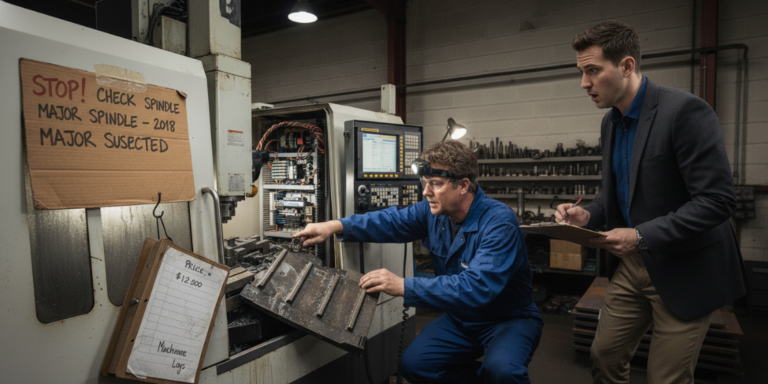
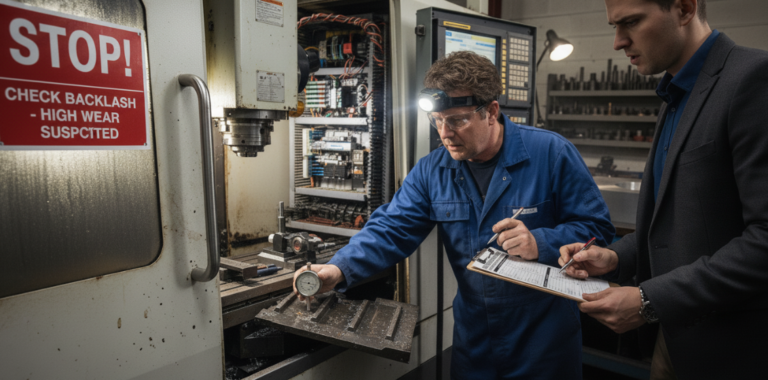
Buying a used CNC machine can be one of the best financial decisions a manufacturing business makes — or one of the most expensive mistakes.
Most problems don’t happen because used CNC machines are bad.
They happen because buyers skip critical checks, rush decisions, or trust the wrong signals.
This guide walks you through the most common mistakes buyers make when purchasing a used CNC machine — and how to avoid them with confidence.
Why These Mistakes Happen So Often
Used CNC machines are unique.
Each one has its own:
- Usage history
- Maintenance quality
- Wear pattern
- Remaining lifespan
Yet many buyers treat them like standard products with fixed value.
That’s where things go wrong.
Mistake #1: Choosing Price Over Condition
The most common mistake is focusing only on the lowest price.
A cheaper used CNC machine often:
- Needs immediate repairs
- Has worn spindles or ball screws
- Lacks proper documentation
What looks like a bargain can quickly become a financial drain.
Smart approach:
Always evaluate condition first, then price. A slightly higher-priced used CNC machine in better condition usually costs less in the long run.
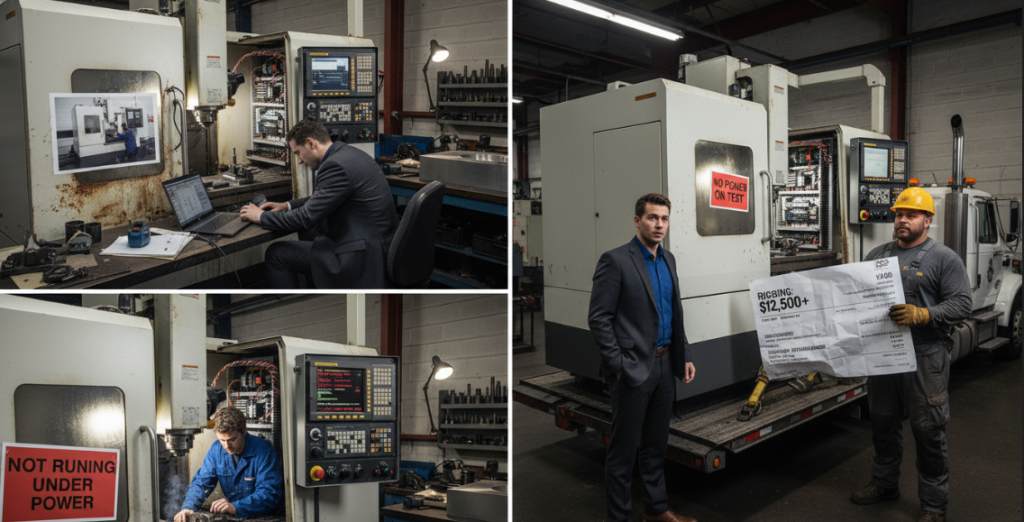
Mistake #2: Skipping Proper Inspection
Some buyers rely on photos, videos, or verbal assurances.
This is risky.
Without physical inspection or test cuts, you may miss:
- Backlash issues
- Alignment problems
- Spindle vibration
- Electrical faults
A used CNC machine should be tested under real operating conditions whenever possible.
Mistake #3: Ignoring the Machine’s Usage History
Age doesn’t tell the full story.
A 15-year-old used CNC machine used lightly may be in better shape than a 7-year-old machine used in continuous production.
Always ask:
- What parts were machined?
- How many hours per day did it run?
- Was it used for heavy cutting or precision work?
Usage history often predicts future reliability.
Mistake #4: Not Checking Ball Screws and Backlash
Ball screws are critical — and expensive.
Ignoring backlash testing can result in:
- Poor dimensional accuracy
- Repeatability problems
- Frequent part rejections
Many buyers assume backlash can be adjusted easily. In reality, severe wear often means replacement.
Mistake #5: Overlooking Spindle Condition
Spindle problems are among the costliest surprises.
Buyers often:
- Listen briefly at low RPM
- Skip warm-up tests
- Ignore vibration at high speed
A used CNC machine with a weak spindle may still run — but it won’t produce consistent quality.
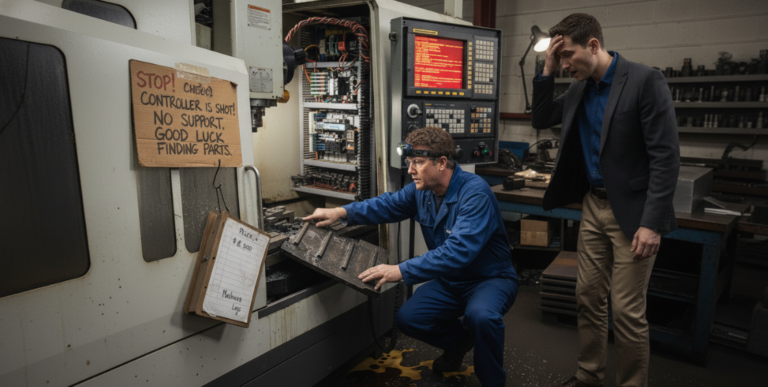
Mistake #6: Assuming the Controller Is “Good Enough”
CNC controllers are not all equal.
Mistakes buyers make:
- Not checking alarm history
- Ignoring outdated software compatibility
- Assuming replacement parts are available
A reliable controller is as important as the mechanical components.
Mistake #7: Forgetting About Electrical Systems
Electrical issues can be hard to diagnose and expensive to fix.
Watch for:
- Dust or oil inside control cabinets
- Burn marks on drives
- Modified or non-original wiring
A clean electrical cabinet usually indicates disciplined maintenance.
Mistake #8: Skipping Accuracy and Test Cuts
Some buyers trust specifications instead of performance.
Only test cuts reveal:
- True machine accuracy
- Surface finish capability
- Real repeatability
A used CNC machine that performs well in test cuts is far more valuable than one that looks good on paper.
Mistake #9: Not Backing Up Software and Parameters
Buying a used CNC machine without parameter backups is risky.
Without proper data:
- Machine behavior can change
- Restoring accuracy becomes difficult
- Controller resets can cause downtime
Always secure a full backup before finalizing the purchase.
Mistake #10: Underestimating Total Ownership Cost
The purchase price is just one part of the investment.
Many buyers forget:
- Transportation and rigging
- Installation and leveling
- Electrical modifications
- Initial repairs and tooling
A low-cost used CNC machine can end up costing more than expected if these are ignored.
Mistake #11: Rushing the Decision
Pressure tactics lead to regret.
Statements like:
- “Someone else is ready to buy”
- “This price is valid only today”
…are often used to rush buyers.
Good used CNC machines will always exist. Bad decisions last longer.
Mistake #12: Buying Without a Clear Purpose
Some buyers buy machines “just in case.”
This often leads to:
- Underutilized equipment
- Higher operating costs
- Poor ROI
Every used CNC machine should have a defined production role before purchase.
How Smart Buyers Avoid These Mistakes
Experienced buyers:
- Use a structured inspection checklist
- Test machines under real conditions
- Focus on condition, not age
- Plan total cost before buying
- Stay patient and analytical
Knowledge — not urgency — is your biggest advantage.
Quick Summary: Mistakes to Avoid When Buying a Used CNC Machine
Avoid:
- ❌ Buying on price alone
- ❌ Skipping inspections
- ❌ Ignoring backlash and spindle health
- ❌ Trusting appearance over performance
- ❌ Forgetting software backups
- ❌ Underestimating true cost
Final Thoughts: Buy Smart, Not Fast
A used CNC machine can deliver incredible value when chosen wisely.
Most regrets come from small oversights, not big failures.
If you take your time, inspect properly, and stay informed, a used CNC machine can become one of the most profitable assets in your workshop.
Continue Learning
Explore more expert guides, buyer checklists, and global insights at
UsedCNCMachineForSale.com
Buying a used CNC machine can be one of the best financial decisions a manufacturing business makes — or one of the most expensive mistakes.
Most problems don’t happen because used CNC machines are bad.
They happen because buyers skip critical checks, rush decisions, or trust the wrong signals.
This guide walks you through the most common mistakes buyers make when purchasing a used CNC machine — and how to avoid them with confidence.
Why These Mistakes Happen So Often
Used CNC machines are unique.
Each one has its own:
- Usage history
- Maintenance quality
- Wear pattern
- Remaining lifespan
Yet many buyers treat them like standard products with fixed value.
That’s where things go wrong.
Mistake #1: Choosing Price Over Condition
The most common mistake is focusing only on the lowest price.
A cheaper used CNC machine often:
- Needs immediate repairs
- Has worn spindles or ball screws
- Lacks proper documentation
What looks like a bargain can quickly become a financial drain.
Smart approach:
Always evaluate condition first, then price. A slightly higher-priced used CNC machine in better condition usually costs less in the long run.
Mistake #2: Skipping Proper Inspection
Some buyers rely on photos, videos, or verbal assurances.
This is risky.
Without physical inspection or test cuts, you may miss:
- Backlash issues
- Alignment problems
- Spindle vibration
- Electrical faults
A used CNC machine should be tested under real operating conditions whenever possible.
Mistake #3: Ignoring the Machine’s Usage History
Age doesn’t tell the full story.
A 15-year-old used CNC machine used lightly may be in better shape than a 7-year-old machine used in continuous production.
Always ask:
- What parts were machined?
- How many hours per day did it run?
- Was it used for heavy cutting or precision work?
Usage history often predicts future reliability.
Mistake #4: Not Checking Ball Screws and Backlash
Ball screws are critical — and expensive.
Ignoring backlash testing can result in:
- Poor dimensional accuracy
- Repeatability problems
- Frequent part rejections
Many buyers assume backlash can be adjusted easily. In reality, severe wear often means replacement.
Mistake #5: Overlooking Spindle Condition
Spindle problems are among the costliest surprises.
Buyers often:
- Listen briefly at low RPM
- Skip warm-up tests
- Ignore vibration at high speed
A used CNC machine with a weak spindle may still run — but it won’t produce consistent quality.
Mistake #6: Assuming the Controller Is “Good Enough”
CNC controllers are not all equal.
Mistakes buyers make:
- Not checking alarm history
- Ignoring outdated software compatibility
- Assuming replacement parts are available
A reliable controller is as important as the mechanical components.
Mistake #7: Forgetting About Electrical Systems
Electrical issues can be hard to diagnose and expensive to fix.
Watch for:
- Dust or oil inside control cabinets
- Burn marks on drives
- Modified or non-original wiring
A clean electrical cabinet usually indicates disciplined maintenance.
Mistake #8: Skipping Accuracy and Test Cuts
Some buyers trust specifications instead of performance.
Only test cuts reveal:
- True machine accuracy
- Surface finish capability
- Real repeatability
A used CNC machine that performs well in test cuts is far more valuable than one that looks good on paper.
Mistake #9: Not Backing Up Software and Parameters
Buying a used CNC machine without parameter backups is risky.
Without proper data:
- Machine behavior can change
- Restoring accuracy becomes difficult
- Controller resets can cause downtime
Always secure a full backup before finalizing the purchase.
Mistake #10: Underestimating Total Ownership Cost
The purchase price is just one part of the investment.
Many buyers forget:
- Transportation and rigging
- Installation and leveling
- Electrical modifications
- Initial repairs and tooling
A low-cost used CNC machine can end up costing more than expected if these are ignored.
Mistake #11: Rushing the Decision
Pressure tactics lead to regret.
Statements like:
- “Someone else is ready to buy”
- “This price is valid only today”
…are often used to rush buyers.
Good used CNC machines will always exist. Bad decisions last longer.
Mistake #12: Buying Without a Clear Purpose
Some buyers buy machines “just in case.”
This often leads to:
- Underutilized equipment
- Higher operating costs
- Poor ROI
Every used CNC machine should have a defined production role before purchase.
How Smart Buyers Avoid These Mistakes
Experienced buyers:
- Use a structured inspection checklist
- Test machines under real conditions
- Focus on condition, not age
- Plan total cost before buying
- Stay patient and analytical
Knowledge — not urgency — is your biggest advantage.
Quick Summary: Mistakes to Avoid When Buying a Used CNC Machine
Avoid:
- ❌ Buying on price alone
- ❌ Skipping inspections
- ❌ Ignoring backlash and spindle health
- ❌ Trusting appearance over performance
- ❌ Forgetting software backups
- ❌ Underestimating true cost
Final Thoughts: Buy Smart, Not Fast
A used CNC machine can deliver incredible value when chosen wisely.
Most regrets come from small oversights, not big failures.
If you take your time, inspect properly, and stay informed, a used CNC machine can become one of the most profitable assets in your workshop.
Continue Learning
Explore more expert guides, buyer checklists, and global insights at
UsedCNCMachineForSale.com