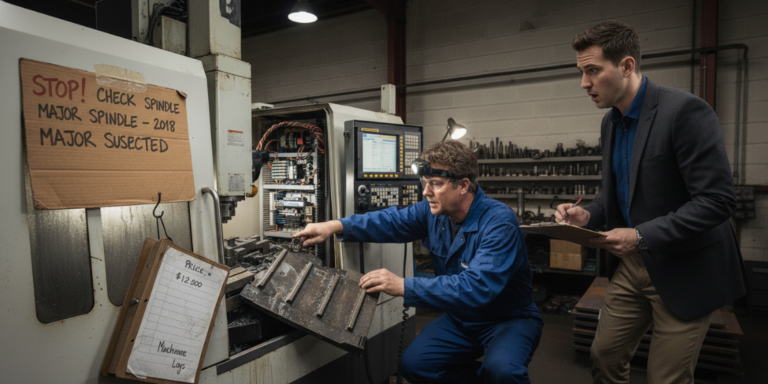
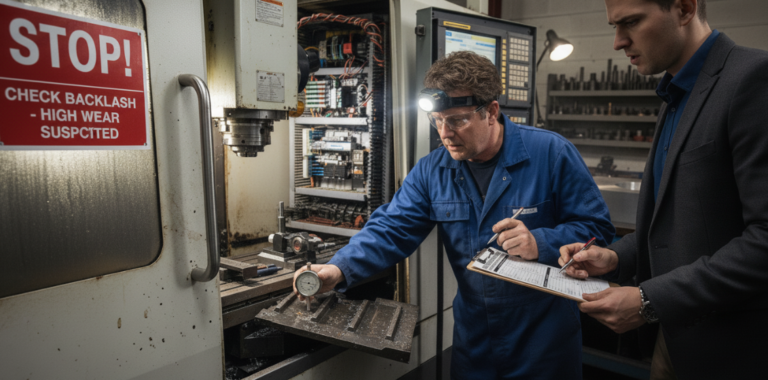
When buyers evaluate a used CNC machine, they often ask the wrong first question:
“How old is the machine?”
The more important question is:
“How was the machine used?”
Ignoring the machine’s usage history is one of the most common mistakes when buying used CNC machines, and it quietly destroys value, reliability, and return on investment.
In this article, we’ll explain why usage history matters more than age, what buyers usually overlook, and how smart buyers protect themselves.
Why Usage History Matters More Than the Manufacturing Year
Two used CNC machines can be:
- The same brand
- The same model
- The same year
Yet one can run accurately for years — while the other fails within months.
The difference is usage history.
A used CNC machine is shaped by:
- What it machined
- How long it ran each day
- How aggressively it was pushed
- How it was maintained
Age alone tells you very little.
Why Buyers Ignore Usage History
This mistake usually happens because:
- Sellers highlight year and model, not usage
- Buyers assume “newer is always better”
- Usage details are not clearly documented
- Buyers don’t know what questions to ask
As a result, buyers focus on visible factors and miss what truly determines machine health.
Light Duty vs Heavy Production: A Huge Difference
Not all CNC work is equal.
Light-Duty Usage
- Job shop or prototype work
- Short cycle times
- Limited daily operation
- Lower mechanical stress
Heavy-Duty Usage
- 24/7 production
- Hard materials
- Aggressive cutting parameters
- High spindle load
A used CNC machine from light-duty work often has more remaining life, even if it’s older.
How Ignoring Usage History Leads to Problems
When buyers skip usage history, they risk:
- Unexpected spindle failure
- Rapid backlash development
- Poor repeatability
- Frequent downtime
- Higher maintenance costs
These problems usually appear after production starts — when reversing the decision is impossible.
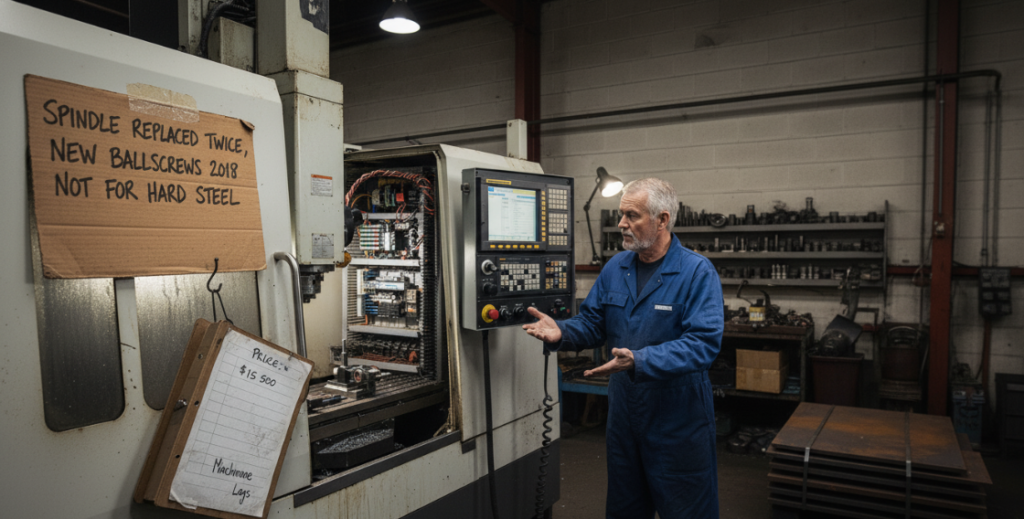
Real-World Example: Newer but Worn vs Older but Healthy
Machine A:
- 6 years old
- Ran continuously in mass production
- High spindle hours
- Minimal maintenance documentation
Machine B:
- 12 years old
- Used for low-volume job work
- Regular maintenance
- Documented service history
Many buyers choose Machine A — and regret it later.
Machine B often delivers better accuracy, stability, and long-term value.
What to Ask to Understand a Used CNC Machine’s Usage History
Smart buyers ask specific questions, such as:
- What materials were machined?
- How many shifts per day did it run?
- Average daily operating hours?
- Was it used for heavy roughing or finishing?
- Were there major component replacements?
Even partial answers reveal valuable insights.
Why “Low Hours” Alone Is Not Enough
Some sellers advertise “low hours.”
Be careful.
A used CNC machine can have:
- Low displayed hours
- High mechanical stress
- Poor maintenance
Hours must be evaluated alongside usage type and maintenance quality.
The Link Between Usage History and Inspection Results
Usage history explains inspection findings.
For example:
- Excess backlash often reflects heavy roughing work
- Spindle noise may indicate long high-RPM operation
- Electrical wear may show continuous usage
Understanding usage history helps buyers interpret inspection results accurately.
How Usage History Impacts True Machine Value
Usage history directly affects:
- Remaining lifespan
- Maintenance cost
- Production reliability
- Resale value
In the used CNC market, machines with known, lighter usage often command higher prices — and deserve them.
How Smart Buyers Avoid This Common Mistake
Experienced buyers:
- Ask detailed usage questions early
- Compare machines by application, not age
- Cross-check usage claims with inspection results
- Value documented maintenance over appearance
They know a used CNC machine tells its story — if you ask the right questions.
Quick Reminder for Buyers
When buying a used CNC machine:
- ❌ Age alone is misleading
- ❌ Newer doesn’t always mean better
- ✅ Usage history reveals true wear
- ✅ Maintenance matters more than model year
Final Thoughts: Buy History, Not Just Hardware
Ignoring the machine’s usage history is one of the most common mistakes when buying used CNC machines, and it often leads to disappointment.
A used CNC machine is not just metal and electronics — it’s a record of how it was treated.
If you understand that history, you buy with clarity.
If you ignore it, you buy blind.
In the used CNC market, history is value.
Continue Learning
Explore more expert insights on Common Mistakes When Buying Used CNC Machines, buyer guides, and inspection strategies at
UsedCNCMachineForSale.com
When buyers evaluate a used CNC machine, they often ask the wrong first question:
“How old is the machine?”
The more important question is:
“How was the machine used?”
Ignoring the machine’s usage history is one of the most common mistakes when buying used CNC machines, and it quietly destroys value, reliability, and return on investment.
In this article, we’ll explain why usage history matters more than age, what buyers usually overlook, and how smart buyers protect themselves.
Why Usage History Matters More Than the Manufacturing Year
Two used CNC machines can be:
- The same brand
- The same model
- The same year
Yet one can run accurately for years — while the other fails within months.
The difference is usage history.
A used CNC machine is shaped by:
- What it machined
- How long it ran each day
- How aggressively it was pushed
- How it was maintained
Age alone tells you very little.
Why Buyers Ignore Usage History
This mistake usually happens because:
- Sellers highlight year and model, not usage
- Buyers assume “newer is always better”
- Usage details are not clearly documented
- Buyers don’t know what questions to ask
As a result, buyers focus on visible factors and miss what truly determines machine health.
Light Duty vs Heavy Production: A Huge Difference
Not all CNC work is equal.
Light-Duty Usage
- Job shop or prototype work
- Short cycle times
- Limited daily operation
- Lower mechanical stress
Heavy-Duty Usage
- 24/7 production
- Hard materials
- Aggressive cutting parameters
- High spindle load
A used CNC machine from light-duty work often has more remaining life, even if it’s older.
How Ignoring Usage History Leads to Problems
When buyers skip usage history, they risk:
- Unexpected spindle failure
- Rapid backlash development
- Poor repeatability
- Frequent downtime
- Higher maintenance costs
These problems usually appear after production starts — when reversing the decision is impossible.
Real-World Example: Newer but Worn vs Older but Healthy
Machine A:
- 6 years old
- Ran continuously in mass production
- High spindle hours
- Minimal maintenance documentation
Machine B:
- 12 years old
- Used for low-volume job work
- Regular maintenance
- Documented service history
Many buyers choose Machine A — and regret it later.
Machine B often delivers better accuracy, stability, and long-term value.
What to Ask to Understand a Used CNC Machine’s Usage History
Smart buyers ask specific questions, such as:
- What materials were machined?
- How many shifts per day did it run?
- Average daily operating hours?
- Was it used for heavy roughing or finishing?
- Were there major component replacements?
Even partial answers reveal valuable insights.
Why “Low Hours” Alone Is Not Enough
Some sellers advertise “low hours.”
Be careful.
A used CNC machine can have:
- Low displayed hours
- High mechanical stress
- Poor maintenance
Hours must be evaluated alongside usage type and maintenance quality.
The Link Between Usage History and Inspection Results
Usage history explains inspection findings.
For example:
- Excess backlash often reflects heavy roughing work
- Spindle noise may indicate long high-RPM operation
- Electrical wear may show continuous usage
Understanding usage history helps buyers interpret inspection results accurately.
How Usage History Impacts True Machine Value
Usage history directly affects:
- Remaining lifespan
- Maintenance cost
- Production reliability
- Resale value
In the used CNC market, machines with known, lighter usage often command higher prices — and deserve them.
How Smart Buyers Avoid This Common Mistake
Experienced buyers:
- Ask detailed usage questions early
- Compare machines by application, not age
- Cross-check usage claims with inspection results
- Value documented maintenance over appearance
They know a used CNC machine tells its story — if you ask the right questions.
Quick Reminder for Buyers
When buying a used CNC machine:
- ❌ Age alone is misleading
- ❌ Newer doesn’t always mean better
- ✅ Usage history reveals true wear
- ✅ Maintenance matters more than model year
Final Thoughts: Buy History, Not Just Hardware
Ignoring the machine’s usage history is one of the most common mistakes when buying used CNC machines, and it often leads to disappointment.
A used CNC machine is not just metal and electronics — it’s a record of how it was treated.
If you understand that history, you buy with clarity.
If you ignore it, you buy blind.
In the used CNC market, history is value.
Continue Learning
Explore more expert insights on Common Mistakes When Buying Used CNC Machines, buyer guides, and inspection strategies at
UsedCNCMachineForSale.com